How to Get Rid of Crabgrass in Your Lawn (And Keep It Out)
If you’re trying to figure out how to get rid of crabgrass in your lawn, you’re not alone, it’s one of the most common turf problems we see across Charleston properties. Crabgrass thrives in the Lowcountry’s warm, sandy soil and can take over thin or stressed turf in a single growing season. At T&T Lawn and Landscape, we deal with crabgrass infestations on residential and commercial lawns every year. This guide walks you through the proven methods we use, from pre-emergent applications to cultural practices, so you can reclaim your yard and keep it weed-free.
What Is Crabgrass and Why Does It Take Over Your Lawn?
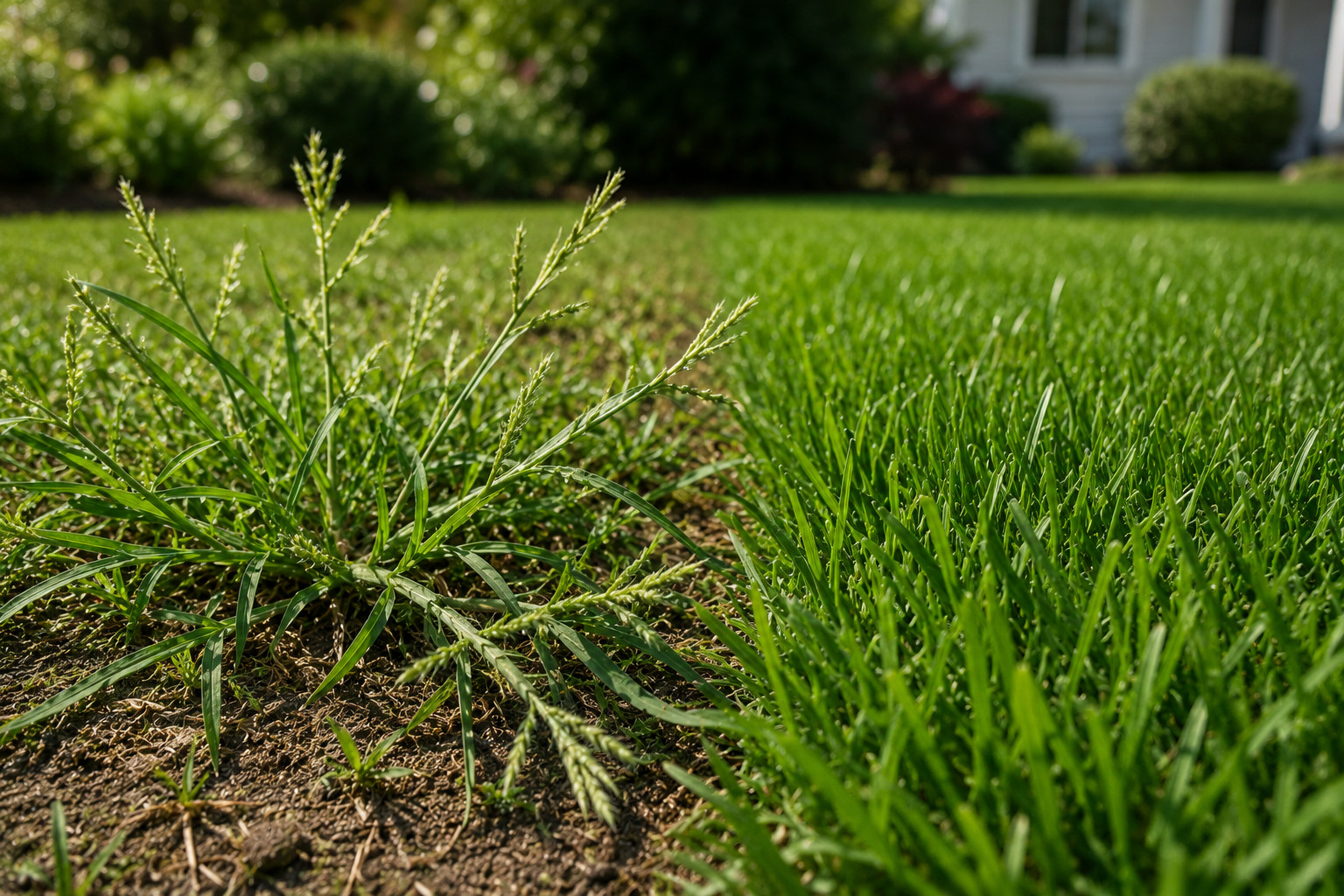
Crabgrass (Digitaria) is a warm-season annual weed that germinates each spring, grows aggressively through summer, and dies after the first frost, but not before dropping thousands of seeds. A single crabgrass plant can produce up to 150,000 seeds in one season, according to Purdue University Extension. Those seeds sit in the soil through winter and germinate the following spring when soil temperatures hit 55°F for several consecutive days.
In Charleston, our sandy, well-drained soil warms up earlier than clay-heavy soils further inland. That gives crabgrass a head start. Add in full sun exposure, thin turf, and compacted areas near driveways or sidewalks, and you’ve got ideal conditions for a crabgrass takeover.
Crabgrass spreads low and flat, forming thick mats that crowd out desirable turf grasses like centipede, Bermuda, and St. Augustine. It’s especially aggressive in lawns that are mowed too short or under-fertilized. The key thing to understand: crabgrass fills gaps. If your lawn has bare spots or weak turf, crabgrass will find them first.
How Pre-Emergent Herbicides Stop Crabgrass Before It Starts
Pre-emergent herbicides are the single most effective tool for crabgrass control. They work by creating a chemical barrier in the top layer of soil that prevents crabgrass seeds from developing roots after germination. The seeds still sprout, but the seedlings die before they can establish.
Timing is everything. In the Charleston area, we typically apply pre-emergent treatments between late February and mid-March, when soil temperatures at a 2-inch depth consistently reach 55°F. Apply too early, and the product breaks down before germination peaks. Apply too late, and crabgrass is already up and growing, at that point, a pre-emergent won’t help.
Common active ingredients include prodiamine (Barricade), pendimethalin (Pendulum), and dithiopyr (Dimension). Dithiopyr offers a small window of post-emergent activity on very young crabgrass, which makes it a good choice if your timing is slightly off.
A few rules we follow at T&T Lawn and Landscape:
- Water the product in within 24–48 hours of application. Pre-emergent needs moisture to activate.
- Don’t aerate or dethatch after application. Breaking the soil barrier defeats the purpose.
- Consider a split application, half in late February, half in late April, for extended coverage through the long Charleston growing season.
Pre-emergent herbicides are a preventive measure, not a cure. They stop new crabgrass from establishing but do nothing to existing plants.
Using Post-Emergent Treatments to Kill Active Crabgrass
If crabgrass is already visible in your lawn, you need a post-emergent herbicide. These products target actively growing crabgrass and kill it after it has emerged from the soil.
Quinclorac is the most widely used post-emergent for crabgrass and is safe on most warm-season turf types common in the Lowcountry, including Bermuda and zoysia. For centipede and St. Augustine lawns, both popular across James Island, West Ashley, and Mount Pleasant, check product labels carefully, as some herbicides can damage these grasses.
Post-emergent treatments work best on young crabgrass with fewer than four tillers (side shoots). Once crabgrass matures and forms a thick, spreading mat, chemical control becomes much harder. Mature plants may require repeat applications spaced 7–14 days apart.
Here’s what we recommend:
- Treat crabgrass early in the season, ideally before it reaches the tillering stage.
- Apply on a calm day when temperatures are between 60°F and 85°F.
- Add a surfactant to help the herbicide stick to the waxy crabgrass leaves.
For severe infestations, spot treatment is more practical than blanket spraying. We often combine post-emergent applications with overseeding in the fall to fill the bare spots left behind after the crabgrass dies. This reduces the open ground available for new crabgrass seeds the following spring.
Cultural Lawn Care Practices That Prevent Crabgrass From Returning
Herbicides are only part of the solution. The best long-term defense against crabgrass is a thick, healthy lawn that leaves no room for weeds to establish. We see this consistently on the properties we maintain, lawns that receive regular care have far fewer weed problems than neglected ones.
Mow at the right height. Most warm-season grasses in Charleston perform best at 2.5 to 3.5 inches. Mowing too low exposes soil to sunlight, which triggers crabgrass germination. Keep your mower blade sharp and never remove more than one-third of the grass blade at a time.
Water deeply and less often. Shallow, frequent watering encourages shallow root systems and favors crabgrass. Water your lawn 1 inch per week in one or two deep sessions. This promotes deeper root growth in your desirable turf.
Fertilize on schedule. A proper fertilization program keeps your lawn dense and competitive. We build our fertilization plans around soil tests, which account for the sandy, low-nutrient soil conditions common across the greater Charleston area.
Aerate compacted soil. Compaction restricts root growth and creates bare patches, exactly the conditions crabgrass exploits. Core aeration in fall opens up the soil and improves water and nutrient penetration.
Overseed thin areas. Bare or thin spots are open invitations for crabgrass. Fall overseeding fills those gaps with desirable turf before the next crabgrass germination cycle begins in spring.
When to Call a Professional Weed Control Service
DIY crabgrass control works for minor problems, but some situations call for professional help. If crabgrass covers more than 25–30% of your lawn, if you’ve applied pre-emergent products without results, or if you’re unsure which turf type you have (and hence which herbicides are safe), a professional weed control service can save you time and prevent costly mistakes.
At T&T Lawn and Landscape, our weed control programs are built around the specific conditions of each property. We identify your grass type, assess the severity of the crabgrass problem, and apply the right products at the right time. Timothy Fowler stays involved on every property, you’re not dealing with rotating crews who don’t know your lawn’s history.
We also integrate crabgrass prevention into our broader lawn care and turf programs, which include fertilization, aeration, overseeding, and insect control. This full-service approach addresses the root causes of crabgrass, not just the symptoms.
Season-by-Season Crabgrass Prevention Timeline for 2026
Crabgrass prevention is a year-round effort. Here’s the timeline we follow for Charleston-area lawns in 2026:
Late February – Mid-March: Apply the first round of pre-emergent herbicide when soil temperatures reach 55°F. Monitor soil temps using a probe thermometer at 2-inch depth.
Late April – Early May: Apply a second split application of pre-emergent if you’re using that strategy. Scout the lawn for any crabgrass breakthrough and treat young plants with a post-emergent product.
June – August: This is peak crabgrass season. Spot-treat any active crabgrass early. Maintain proper mowing height and watering schedule. Avoid fertilizing with high-nitrogen products during extreme heat, which can stress turf and open the door to weeds.
September – October: Crabgrass begins to decline as temperatures cool. Core aerate and overseed thin areas to thicken your turf before winter dormancy. Apply a fall fertilizer to support root development.
November – January: Crabgrass is dead, but seeds remain in the soil. Use this time to plan your pre-emergent schedule, test your soil, and address any drainage or compaction issues. A soil test through Clemson University’s Agricultural Service Laboratory costs around $6 and gives you clear data on what your lawn needs.
Following this schedule consistently is the most reliable way to get rid of crabgrass in your lawn and keep it from coming back.
Take Control of Crabgrass With the Right Plan and the Right Team
Getting rid of crabgrass comes down to timing, the right products, and consistent lawn care habits. Pre-emergent herbicides prevent new growth. Post-emergent treatments handle existing plants. And strong cultural practices, proper mowing, watering, fertilization, and aeration, keep your lawn thick enough to resist future invasions.
If you need help putting a crabgrass control plan together for your property, T&T Lawn and Landscape is here. We serve homeowners and commercial properties across Charleston and the Lowcountry with a full range of lawn care and weed control services. Reach out for a free estimate, we’ll walk the property with you and build a plan that works.